Tag Archives: emotion coaching
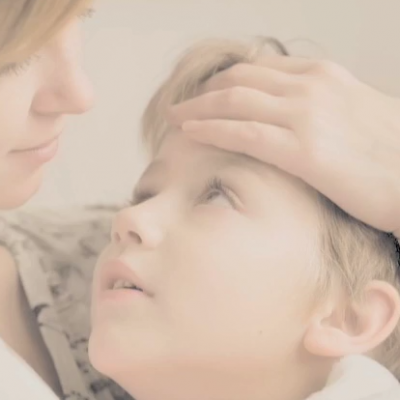
Importance of Emotion coaching Young Kids
Empathy is the cornerstone of good parenting. Nothing feels worse than to behave badly with your child and then see them sweetly sleeping in their beds. With my method you don’t have all the guilt and regret and it makes parents and kids feel good. A child’s entire world is experienced and processed through an emotional filter. If we don’t take into consideration the impact of child’s emotional world then we miss a golden opportunity for strengthening their emotional intelligence. We can begin to emotion coach children at birth. Now that we know babies can experience depression as early as 6 months of age – we have to start dealing with children’s emotions very early on in their life. When we emotion coach kids, it makes time of discipline much more manageable, and what parents wouldn’t want that? Forget the timeouts, reward charts and old dated modes of discipline. Emotion coaching sharpens social intelligence. If you coach your kids they will be more resilient, play well with others and are physically healthier. Plus they don’t disengage from you during times of discipline, instead they actually stay connected with you. Emotion coached kids do the right thing when we’re not there. If you have a child that you have to be their emotion coach and I’ll show you how in the Go-To Mom’s Parents’ Guide to Emotion Coaching Young Children. It will teach the tools and techniques to make them a preschooler whisperer!
For more great parenting tips check out Kimberley’s book, www.TheGoToMomsGuide.com.
Never Spank, Swat or Hit a Child: How Children Learn Best
Many parents are coming to grips with the fact that spanking their children doesn’t work. Spankings teach short-term lessons, but long-term violence and come with a host of potential undesirable outcomes in adulthood. Those who support spanking say it’s okay if it’s deliberate and methodical. “Never spank in anger,” they say. This message claims that hurting a child is acceptable as long it’s done calmly. But research (Straus 1999) shows that over time a parent who spanks tends to hit harder each time. When spankings lose the desired effect parents tend to be at risk for using too much force leaving children at risk for injury.
Many parents defend their right to spank because it provides them with an outlet for frustration and anger with their child – not because it’s effective way to improve their child’s behavior. There is never a right time or safe way to hit a child because acts of violence, by their very nature, tend to escalate as times goes on. I come from a dark past, and violent childhood and know that NO ONE EVER DESERVES TO BE HIT. EVER. Not a pet, not a spouse and especially not a child.
Hitting children destroys their self-esteem and the best development occurs in nurturing and violence-free environments
Remember when you were little and everything was so exciting to you? You may have felt that world was a fun place to be – life without judgment, responsibilities, just learning your role and value in life. During that time is when you probably learned the most. Kids have limited life experience, they don’t always know “what the right thing to do is.” Give them the benefit, they’re still little learners.
Early childhood is a very sensitive and critical time for brain development. Stress caused by fear of spanking can have a negative affect on the development and function of a child’s brain. It is during this period of great plasticity and vulnerability that many children are subjected to physical punishment. I don’t know any parent who would intentionally put their child at risk for abnormal brain development, however that is often what spankers do.
Spanking impairs the ability to learn and deteriorates school performance
Research states that spanking a child lowers their I.Q. When a child is in a calm and non-threatening state the brain is in its prime to learn. However, if spanking a child makes him or her feel angry or scared they become hyper vigilant and learning comes to a screeching halt. Children who are taught to fear regular spankings tend to live in a semi-agitated state that is not conducive to optimal learning (Perry, 1999).
Spanking sometimes teaches children that it is okay to hit others. Or when you love someone you hit them to make them listen.
Children see their parents as role models. If your child does what they’re told because of the spanking, the lesson you’ve taught is, “violence works.” And you can bet that she’ll learn from your actions, and as a result, use force to win in other situations. When your child grows up do you want them to discuss problems with their spouse or use force to settle conflict?
If you want to do everything within your power to prevent your child from continuing the harmful legacy of spanking when they’re a parent, guide gently, set appropriate limits and emotion coach as much as you possibly can. Stay away from the six common roadblocks – outlined in chapter one that make parenting challenging and ineffective and don’t ever spank.
Advice from a Religious Leader
“I have never accepted the principle of ‘spare the rod and spoil the child.’… I am persuaded that violent fathers produce violent sons…Children don’t need beating. They need love and encouragement. They need fathers to whom they can look with respect rather than fear. Above all, they need example.”
- Gordon B. Hinckley, President, The Church of Jesus Christ of Latter-day Saints, October 1994 General Conference.
Do you remember how you felt after you were hit? You probably felt anger, sadness, confusion, and may have even felt unloved. Although parents don’t intend for their child to feel these things most often they do. Many people say, “I was spanked and turned out just fine,” or “I deserved to be hit, because I was a bad kid.” The reason people make these statements and become defensive is because it’s painful to admit that their parents the ones who should have protected them did something terribly wrong. We all see our parents as the most important people in our lives and if we admit that they’ve done us wrong or are pathological, we too might be faulty or damaged goods. It’s a defense that protects us from feeling abandoned – so we defend our parents no matter what wrong they’ve done…It’s hard to admit, but it’s true.
As children become adults they adopt some of the positive qualities from their parents. If you were spanked and feel you turned out to be a good person, it’s not because of the spankings. Many of us who were spanked on occasion are great successful people – but it’s in spite of the spankings, not because of them.
What to do instead of spanking
There are better ways of teaching children how to be cooperative – Fear and aggression are not effective. The true meaning of the word discipline means to guide. Guidance means to teach. When we punish children, we leave out the guidance. Children learn good behavior by imitating good behavior. Children learn morals, values and compassion from their parents. To prepare your child to enter into a healthy adult life with valuable skills, practice teaching him or her how to negotiate, how to compromise, the value of self motivation and how to successfully and non-aggressively resolve conflicts.
Here are a variety of non-aggressive alternatives that parents can use to guide their children.
· Get in touch with your own ‘hot buttons’ and be sure you don’t take your anger and problems over some unresolved conflicts of your own out on your child.
· Take a grown-up ‘cool off’ time when you find yourself too angry to deal with your child
· Begin providing guidance and limit setting as early as infancy
· Keep communicating your words to your baby and young child
· Show more mild disapproval of undesirable behavior
· Discuss your feelings about what you see
· Acknowledge and validate your child’s feelings while setting limits
· Offer alternatives
· Redirect your child’s attention
· Be consistent and follow through (do what you say)
· Offer encouragement when your child follows through
· Offer a ‘thinking or cool down time’ – If your child is over three years old, have her sit with you and think about her actions and ask her what she can do differently next time.
· Offer solutions and ideas with your child – sometimes she may not know what to do and needs your guidance.
For more great parenting tips, check out Kimberley’s book at www.TheGoToMomsGuide.com.
2 Comments
How to Understand and Deal with Tantrums
You are in the market and your child throws the dreaded tantrum, or you’re at a play date and your child is being pushy and bossy and then loses control. Toddlers and preschoolers throw tantrums because they have an intense desire to do things, but their mental and motor skills have developed more quickly than their ability to communicate. Because they don’t quite yet have the ability to express frustration, they do so by throwing a tantrum. Tantrums are a part of normal child development. However, there are ways in which parents can learn how prevent them.
For more information, read Kimberley’s book, “The Go-To Mom’s Parents’ Guide to Emotion Coaching Young Children.”
The Dos of Discipline: Twelve Rules for Getting Great Results With Your Kids!
Parenting is a tough and frustrating job. More than anything we want to help our kids grow into healthy, happy adults. Yet when they don’t behave the way we want them to, it’s all too easy to resort to tactics we’re not proud of. Yelling. Threatening. Spanking. We use these discipline techniques even though we feel bad afterward (and, obviously, so do our kids). And we stay stuck in our cycle of negativity because, quite frankly, we don’t know any good alternatives.
There are positive, effective discipline techniques out there—techniques that result in happy, well-rounded, well-behaved children. And best of all, they allow us to avoid the fighting, stress, and general feel-bad techniques we’ve resorted to in the past. There are better ways of teaching children to be cooperative. Fear and aggression are not effective, and they don’t feel good to anyone. The true meaning of the word discipline is ‘to guide’. And guidance means teaching. When we punish our children, we often leave out the guidance, which means we don’t often get the results we are looking for.
The alternative is to employ a technique known as emotion coaching. It’s a gentle, open-hearted alternative to old-fashioned, often aggressive discipline that can be used with babies, toddlers, preschoolers, and young school-aged children. Ultimately, emotion coaching gives parents the know-how and the confidence to build strong, productive relationships with their children.
There are a few simple, feel-good strategies parents can employ to make their disciplining more effective. Read on for twelve tips you can use starting when your child is an infant.
-Set limits and expectations all along the way. Parents often make the mistake of thinking that discipline starts once children are older—not babies. But it’s a good idea to begin providing guidance and setting limits as early as infancy. This sets your child up for success—if she knows what the boundaries and expectations are from the beginning, then when she’s two you won’t be trying to undo all her bad habits or behaviors.
-Don’t let your own issues affect your discipline. If you’ve had a bad day at work or are just plain exhausted, it can be much easier to operate on a short fuse and let even the tiniest things push you over the edge. Before you interact with or try to redirect your child, make sure that you aren’t letting your own personal anger or problems affect the way you react toward your child.
-When your blood starts to boil, take a grown-up time-out. Take a grown-up “cool-off” time when you find yourself too angry to deal with your child. Once you feel calm and collected, return to your child to address the situation at hand.
-Keep communicating. The earlier you establish a healthy line of communication with your child, the more effective you will be in communicating discipline or behavioral changes to him. No matter what age your child may be, it’s important to keep communicating your thoughts and feelings with him.
-Discuss your feelings about what you see. When our kids misbehave, we often neglect to tell them how their actions make us feel. But by explaining to your child that it makes mommy sad when she sees her children fighting or not sharing with one another, we help them to begin to understand the effect their behavior has on others, which in turn makes them more likely to react differently the next time.
-Let children know that parents DO understand. Acknowledge and validate your child’s feelings while setting limits. Let her know that you aren’t just handing down a punishment and you do realize that she is experiencing emotions, too. When she knows that she is being heard and understood, she is more likely to listen to what you have to say as well.
-Give the child a good behavior to use in place of the bad one. Children can’t learn how we want them to behave unless we replace their bad behavior with the one we want to see or expect. When your child misbehaves, be sure to follow up your “We don’t run inside” with a helpful suggestion for what he can do—like “But we can run and jump and play all we want to outside. Would you like for me to go out and play with you?”
-Redirect your child’s attention. If your little one is throwing a tantrum in the grocery store or having a meltdown over the toy her little brother just stole, then redirect her attention to another activity or train of thought. Have her help you on a “scavenger hunt” to complete your shopping list, or sit down with her in another room to play a game or read a book. Pulling her away from the situation at hand will help you both to calm down and move forward.
-Do what you say you’re going to do every single time. Being a parent takes a lot of patience and sacrifice. And that means following through on discipline even when it’s inconvenient or unpopular. If the consequences you employ as discipline are merely empty threats, your child will know as much and the behavior will never change. If the consequence of continued bad behavior is leaving the fun birthday party, don’t just threaten it—leave the birthday party. It might feel awkward and be inconvenient, but the payoff will be a child who knows you mean business.
-Make encouragement one of your top tools. Discipline doesn’t have to be only about the “don’t do thats” or the “because I said sos” (and it shouldn’t be!). Children love nothing more than to please their parents, and your encouragement is worth its weight in gold. Make sure you offer encouragement when your child follows through on a good behavior. If he knows you can be pleased, he will work hard to make it happen time and again!
-Take some time to talk it out. If your child is over three years old, have her sit with you and think about her actions; then ask her what she can do differently next time. Taking a “thinking time” or “cool-down time” helps her to become an active part of her discipline, so that it feels less like a commandment being handed down and more like a decision and effort she is a part of.
-Brainstorm ideas for better behavior. While it may seem obvious to us how our kids should behave, it’s not always so black and white for the kids themselves. We as parents need to be vigilant about offering solutions and brainstorming ideas with our children—because there will be times when they may not know what to do and will need our guidance. Write down a list of behaviors that are a problem and brainstorm together how they can react differently, so they have solutions to choose from the next time those situations occur.
Children learn good behavior by imitating good behavior. So at the end of the day, the most effective thing a parent can do to ensure that their children learn morals, values, and compassion is to make sure that they see those things in you—especially when it comes to your interactions with them.
Like anything else in parenthood, positive discipline takes a lot of patience, and practice makes perfect. But the reward in the end is worth it. When you start seeing—and feeling—the results, you’ll be glad you took the high road.
For more great parenting tips, check out Kimberley’s book, www.TheGoToMomsGuide.com.
The Preschool Whisperer Tip Five – Dealing With Emotions has To Be Part of Any Parenting Strategy During Times of Discipline
Despite good intentions, today’s parents still rely on what is familiar and comfortable, which means they engage in some of the outdated parenting techniques used by their parents or in some cases in opposition to their parents.
Occasionally I encounter a parent who becomes defensive during the initial part of my parenting class. They have a hard time accessing their own feelings and say, “I can’t emotion-coach, “ or “I don’t think it’s a good idea to constantly tend to my child by always having to ask them how they feel.” They have no idea how to deal with their child’s heated emotions and think it may be coddling or fueling the fire. I ask them to trust me and disclose that I didn’t benefit from being raised in a home where emotional expression was forbidden.
As a child and as a young adult, I was at a disadvantage and it took me well over 25 years to master healthy emotional balance. Luckily in these modern times, parents are encouraged to address the myriad feelings they and their child experience as a regular part of child-rearing.
Research has found that various quick fixes and behavioral approaches are not effective in the long-run. Emotion coaching is dignified and gentle and works well. My book is available on Pre-order status. If you buy it now it will show up on your door step by Sept. 6th. I do hope you take the plunge and become your child’s emotion coach. I know you can do it! Please feel free to interact w/ me on Twitter and let me know what you’re currently using in your parenting tool box. I’m @TheGoToMom
The Preschool Whisperer – Tip Two: Emotion Coach by helping your child describe their feelings
Being an emotion coach for your child will help him learn to recognize, express and regulate his emotions. You’ll be helping his with language development as well. Just think, fewer tantrums because your child will have the words to express his feelings rather than having to act on them.
Emotion coaching promotes the deep connection between you and your child, strengthening your relationship and regular communication. With your guidance, they’ll learn valuable social skills and how to attend to the emotional cues of others. He’ll learn to make new friends and will play well with others.
Emotion coaching helps your child build a “coat of armor” that protects him in times of adversity – he’ll also recover more quickly from negative feelings and experiences. Emotion coaching helps your child learn patience, increases his ability to delay gratification and better manage impulsive behaviors. Children who receive emotion coaching have better concentration at school and master learning tasks easier.
Through emotion coaching your child learns the value of connection, respect and communication in relationships. So as an adult he’ll be able to understand and support the emotions of others. With emotion coaching you help your child become a compassionate parent when his time comes.
To learn more about emotion coaching watch Kimberley’s shows or visit her book website, www.TheGoToMomsGuide.com.
The Preschool Whisperer – Tip One: Emotion Coach Your Young Child
Despite good intentions, today’s parents still rely on what is familiar and comfortable, which means they engage in some of the outdated parenting techniques used by their parents or in some cases in opposition to their parents.
As an emotion coach, you come from a place of empathy. Your first thought is always, “What is my child feeling?” before jumping in and discounting or minimizing whatever just happened or was said. When your child is in distress, the first step is to just go over, check in and assess.
If parents teach their young children how to process uncomfortable feelings such as hurt, shame, guilt or anger, they’ll learn to process them appropriately and carry that skill with them into their adult relationships and into the work place.
We all have room for improvement as parents. I encourage you to watch my Go-To Mom show and try to become more of an emotion coach. Remember to give yourself a break because parenting isn’t easy. If you have difficulty addressing your own emotions, make it a priority to change that – I’m living proof that one can change their negative experience with their emotions. I have faith you too can grow and learn with your child the way I do with mine.
I am a passionate believer in emotion coaching, because it ensures a successful outcome: cooperative, self-reliant and responsible children. And isn’t that every parent’s goal?
For more great parenting tips, check out Kimberley’s book, www.TheGoToMomsGuide.com.